Article: Stainless Steel vs. Copper Tongue Scraper: Which Is Better?
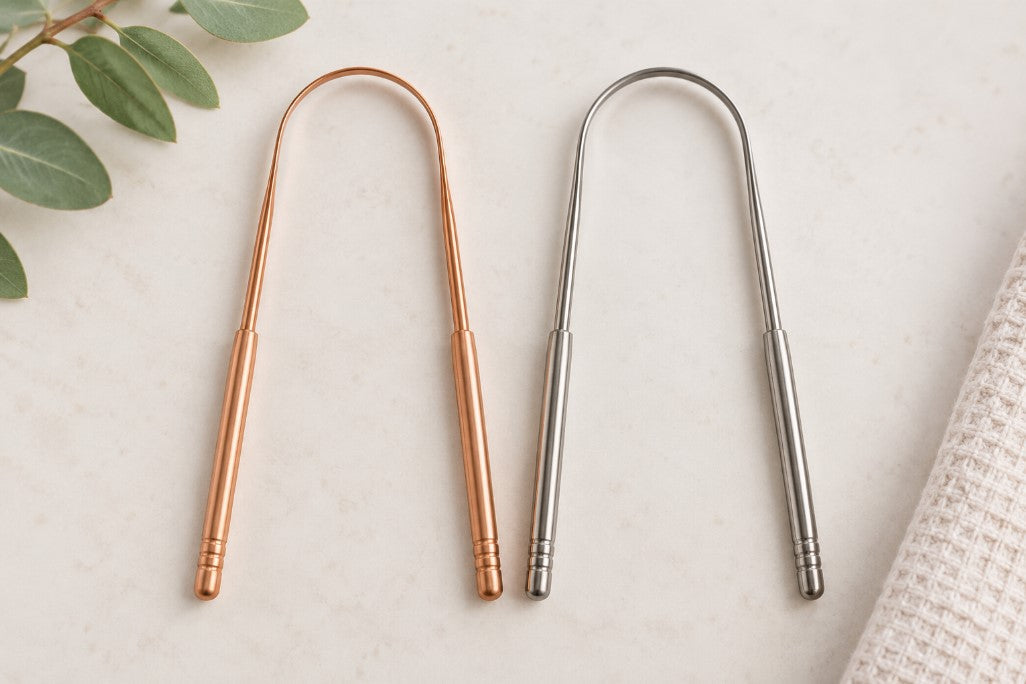
Stainless Steel vs. Copper Tongue Scraper: Which Is Better?
Copper or stainless steel? Both offer a reusable, plastic-free way to clean your tongue. The main differences are appearance and care, so the best choice is the one you'll feel comfortable using regularly.
Here's how the two materials compare, what the research tells us and what to consider when choosing your tongue scraper.
What Does a Tongue Scraper Do?
Even after brushing your teeth, a coating can remain on the surface of your tongue. Tongue scraping is a simple form of mechanical cleaning that helps remove some of this buildup.
Research suggests that adding tongue cleaning to regular toothbrushing can reduce tongue coating and volatile sulphur compounds associated with bad breath, although evidence surrounding the treatment of chronic halitosis remains limited. Read the systematic review of tongue cleaning on PubMed.
And it only takes a few seconds, making it an easy addition to an existing oral care routine.
Why Choose a Copper Tongue Scraper?

Copper tongue scrapers have a long history of use and are often associated with the traditional Ayurvedic practice of tongue cleaning.
One of copper's most interesting characteristics is that copper itself has antimicrobial properties. Research has demonstrated antimicrobial activity on copper surfaces, although this doesn't mean that using a copper tongue scraper has been proven to produce better oral-health outcomes than using a stainless steel one. Read the research on antimicrobial copper surfaces.
Copper is also naturally durable and can last for years when properly cared for.
Why you might choose copper:
- Naturally antimicrobial material
- Durable and reusable
- A plastic-free addition to your oral care routine
- Traditional choice for tongue scraping
- Warm, distinctive copper finish
Keep in mind that copper naturally develops a patina and may darken over time. This is normal and doesn't necessarily mean it needs replacing. Regular cleaning will help keep your scraper in good condition.
Shop Our Pure Copper Tongue Scraper
Our Pure Copper Tongue Scraper is a simple, plastic-free option designed for everyday tongue cleaning. Its curved shape allows you to gently sweep across the surface of your tongue to remove buildup as part of your morning or evening oral care routine.
Shop the Pure Copper Tongue Scraper
Why Choose a Stainless Steel Tongue Scraper?

Stainless steel is another excellent material for a reusable tongue scraper. It's strong, resistant to corrosion and very easy to clean, which makes it particularly well suited to something you'll use every day.
Unlike copper, stainless steel doesn't naturally develop the same type of patina, so it may appeal to someone who prefers a consistently bright, polished appearance with minimal maintenance.
Why you might choose stainless steel:
- Durable and reusable
- Rust and corrosion resistant
- Easy to wash and maintain
- A plastic-free addition to your oral care routine
- Doesn't develop a patina like copper
Shop Our Stainless Steel Tongue Scraper
Our Stainless Steel Tongue Scraper offers a straightforward, durable way to add tongue cleaning to your daily oral care routine. Simply rinse after each use and allow it to dry.
Shop the Stainless Steel Tongue Scraper
Copper vs. Stainless Steel Tongue Scraper: What's the Difference?
The biggest differences come down to the material, appearance and maintenance, rather than evidence showing that one cleans your tongue substantially better than the other.
| Copper Tongue Scraper | Stainless Steel Tongue Scraper | |
|---|---|---|
| Reusable | Yes | Yes |
| Plastic-free | Yes | Yes |
| Durable | Yes | Yes |
| Naturally antimicrobial material | Yes | Not in the same way as copper |
| Corrosion resistant | Requires appropriate care | Highly resistant |
| Develops a patina | Yes | No |
| Easy to clean | Yes | Yes |
| Good for daily tongue scraping | Yes | Yes |
So, Is Copper or Stainless Steel Better for Oral Health?
The studies cited here do not establish that copper tongue scrapers provide better oral-health outcomes than stainless steel tongue scrapers.
What the research does suggest is that the act of mechanically cleaning your tongue can help reduce tongue coating and indicators associated with oral malodour when used alongside toothbrushing. The evidence is less certain when it comes to treating persistent or chronic halitosis. Read more about tongue cleaning and oral malodour on PubMed.
How to Use a Tongue Scraper
Tongue scraping doesn't need to be complicated. Hold the scraper by both ends, place the curved section toward the back of your tongue and gently pull it forward. Rinse the scraper and repeat as needed.
Use light pressure. Scraping shouldn't hurt or cause your tongue to bleed. When you're finished, thoroughly rinse your scraper and allow it to dry.
Tongue scraping also isn't a replacement for brushing, flossing or regular dental care. Persistent bad breath can have causes beyond normal tongue buildup, so if it continues despite good oral hygiene, it's worth speaking with your dentist or healthcare provider.
A Small, Simple Low-Waste Swap
At Simply Natural Canada, we're big believers in making sustainable changes one product at a time.
Prefer a warm copper finish and don't mind a little extra care? Choose copper. Prefer a bright finish with straightforward maintenance? Choose stainless steel. Explore both options below.
Shop the Pure Copper Tongue Scraper | Shop the Stainless Steel Tongue Scraper